
心的唯一
三星又陷“电池门” 不过这次大概不会炸了_我的网站

A |
在与其他人交流后,他发现其他数码 UP 主也注意到了类似的情况。出现问题的手机覆盖范围很广,从古早的三星 Galaxy S4 ,一直到相当近的 Galaxy S20 FE 甚至是Z Fold 2 ,都有出现问题。他说,自己在公开曝光这件事之前,已经等了 50 天,然而三星一直没有给出回复。
一直到视频发出半个月后,三星终于给出了啥也没给的回复:得知这件事的托尼立刻进行了一次身边统计学,结果出人意料,又在情理之中:情理之中的是,整个编辑部能找到的三星手机加起来少于 5 部。
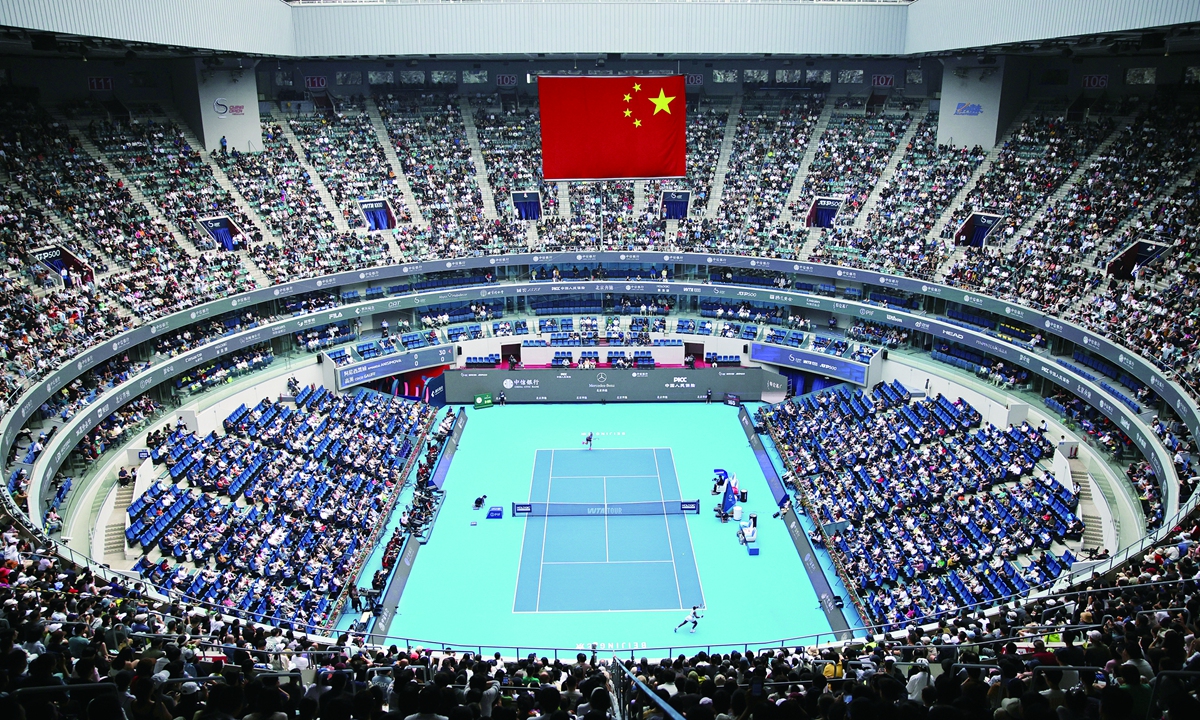
As international tennis tournaments multiply across China this autumn, organizers are increasingly looking beyond the court, seeking to turn a trip to a tournament into a broader travel experience.
The 2026 Chinese tennis season, starting in September, will bring a series of international events to cities including Chengdu, Hangzhou and Suzhou besides flagship events in Beijing and Shanghai.
The growing concentration of tournaments is giving Chinese cities a chance to connect sporting events with local consumption, cultural activities and tourism.
Shanghai offers perhaps the clearest example of how that strategy is developing.
In 2025, the Shanghai Masters attracted more than 250,000 spectators, with about 10 percent coming from overseas and 60 percent from outside Shanghai, according to the Shanghai municipal government. The tournament also generated more than 100 million yuan ($14.8 million) in ticket revenue.
The figures have encouraged organizers and city authorities to think beyond the traditional model of selling a ticket to a tennis match.
During this year's Shanghai Masters, ticket packages will include options combining matches with direct transportation, family experiences and visits to other Shanghai attractions, the organizers have announced.
The approach fits into Shanghai's broader effort to use major sporting events to attract international visitors.
The experience in Shanghai suggests that the relationship between tennis and tourism can work in both directions: a tournament brings people to a city, while the city gives spectators reasons to stay longer and spend money beyond the stadium.
For host cities, making tennis more than a sporting event can also serve as a platform for destination marketing, particularly when the event attracts an international audience.
Sports tourism can offer cities something that conventional sightseeing does not, according to tennis commentator Chen Chi.
"Tennis events can activate destinations and build recognizable identities," Chen told the Global Times. "The international player base and global fan following of tennis give host cities an audience well beyond their local audiences, which is widely seen at the Grand Slam events."
The challenge now is to make those visitors stay longer and explore more of the host city. That is where the "ticket plus" model comes in.
Rather than simply asking visitors to buy a match ticket, organizers are increasingly packaging the tournament with hotels, transportation, attractions and other experiences.

Culture matters
In Suzhou, East China's Jiangsu Province, organizers of the WTA 125 Suzhou Open are trying to connect the tournament with the city's existing cultural resources.
Zhou Yunsong, tournament director of the Suzhou Open, said the timing gives spectators an opportunity to combine a tennis trip with a holiday as it partially overlaps with the annual National Day holidays.
"For our spectators, this is a rare opportunity to combine watching tennis with travel. For domestic tennis fans, they don't have to take time off work as they normally would," Zhou told the Global Times.
The tournament venue, the Yangcheng Lake International Tennis Center, is located near several cultural and commercial areas in Suzhou.
The event has also introduced a hotel-and-tennis package, while organizers have arranged cultural experiences for players, including visits to Suzhou's gardens and local cultural venues.
"To give players an immersive experience of Suzhou's charm, we have planned a range of cultural activities, including visits to the Suzhou Museum, tasting authentic Suzhou cuisine, listening to Kunqu Opera, trying on traditional Chinese qipao and visiting embroidery workshops," Zhou noted.
Zhou sees a broader change in the way people plan trips.
"Traveling to sporting events is becoming a choice for more and more people," he said. "In the past, tourism was about sightseeing - going to a destination, taking photos and checking in. Now, especially among younger generations, people are more inclined to take themed trips."
The idea, he said, is to use the tournament as the starting point for a much wider city experience.
"We hope Suzhou can, with the professional tournament at its core, connect all of Suzhou's tourism resources, including its food, gardens, water towns and shopping, so that visitors can travel around the city for the sake of one match."
Players as ambassadors
For international tennis, this model has another potential advantage: The players themselves can become part of a city's tourism promotion.
Beijing, for instance, is bringing the players themselves into the tourism story. Li Xuhua, general manager of the China Open, said the tournament plans to give players more opportunities to experience the city.
Current world No.1 Jannik Sinner is among the players who are invited to participate in a hutong (traditional alleyway) tour during his stay in Beijing, Li told the Global Times.
The China Open is also expanding its off-site activities this year.
Li said the tournament will work with the local government to establish more match-watching venues in major commercial areas, allowing people to experience the tournament outside the main tennis center.
"The information from the tennis court can go out and reach people around the city," Li said.
For organizers such as Li, the goal is to make the tournament a broader part of the city's cultural and public life.
"We want this rare tennis carnival to be richer and more colorful, and to give fans more time to experience the appeal of tennis," Li said.
The emerging model is still at an early stage as different event organizers are exploring their own strategies. But the direction is becoming clearer: Tournaments are being used not only to fill seats in stadiums, but also to promote cities as travel destinations.
。你说这图和三星无关?无关就对了……▼
而意料之外的是,在抽屉里长期储存的那些三星手机,都没有出现那位 UP 主描述中的鼓包现象。不过上微博转了一圈,托尼发现在事件发酵前, 就已经有不少中国用户反映三星的电池容易鼓包了:
由于这次“ 电池门 ”涉及到的型号和生产时间跨度太大,托尼认为这事不太像是品控或电池厂商问题,更有可能是三星的某种系统性失误。

B | 而这个失误, 最先让人想到的就是三星的电池选型。在 Note7 成为哑火手雷之后,三星痛定思痛,决定改用不太可能起火的凝胶电池。在此之前,市场上只有索尼采用这种电池。大多数手机电池用的是 液态电解质的 锂离子电池,也就是说,电池内部有很多流动性不错的有机液体。

C | 这种有机溶液一旦碰到高温( 比如电池短路 )或水蒸气就会分解,产生大量气体。

D | 一旦电池包装被气体吹爆或是被外部刺穿,电解液就会流出电池,与空气大面积接触,造成起火。而凝胶电池的电解质类似于果冻,即使包装破裂,也不会有电解液流出,大大降低了起火几率。与一般锂离子电池相比,凝胶电池更安全,而且充放电时对电极的损耗更小,容量衰减慢。但凝胶电池生产工艺复杂,价格高;能量密度低,而且电池内阻大。这就导致凝胶电池既贵,容量又小,充电还慢,属于是完美地反向切中手机的续航痛点。因此,没有产品大“ 爆 ”过的手机厂商,一般不会选择凝胶电池。三星延续至今的 25W “ 快 ”充估计就有电池的因素 ▼
当然,凝胶电池作为一种三星特色,最容易让人怀疑与这次三星独占的“ 电池门 ”有关,但也不是三星电池鼓包的唯一可能原因。毕竟这次爆出的鼓包手机并不全都使用了凝胶电池,比如较早发布的三星 Galaxy S4 和 S7 就是一般的锂离子电池。
因此托尼同样怀疑,三星在电池管理方面有缺陷。这可能导致三星手机在长期关机的情况下,电池快速进入过放状态。现代手机关机后,主板上的某些元件可能仍然在工作。

E | 比如大多数手机都支持的关机闹钟和定时关机,就需要记录时间的芯片不断电。

F |
但如果三星的电池管理方案,不会在电池电量低的情况下完全切断主板电源,就会造成过度放电。过放会对电池造成相当严重的损伤。其中一个表现就是电解质在电极上分解,产生大量气体,进而导致鼓包。
当然,相比过度充电或电池内部短路造成的损伤,过放不太可能造成燃烧和爆炸,因为过放状态的电池,能量已经基本耗尽了。但无论是什么原因,鼓包的电池都不该重新充电,它的内部结构可能已经损坏,充电时说不定就会给你来一下狠的。这次三星电池门,从 Mrwhosetheboss 首次报告到现在已经过去两个半个月了,但三星依然没有给出一个有用的答复。虽说电池鼓包并不罕见,但让一群数码大 V 不得不公开质疑产品来为自己要个结果,三星这次无论是产品还是公关,都有不小的问题。还好这次电池不会突然烧起来,不然三星又要挨上一棒了。
Current article:http://www.caonaishengpengchuali.shop/list_8e5ah/6sjp.xlsx
Published on:05:20:46