Takaichi reportedly mulls skipping visit to notorious Yasukuni Shrine on anniversary of WWII surrender; experts see political maneuvering, not historical remorse_我的网站
A |
一键部署OpenClaw 打开短视频平台,到处都是“AI一分钟生成网站”“零代码一键上线”的广告。
B |
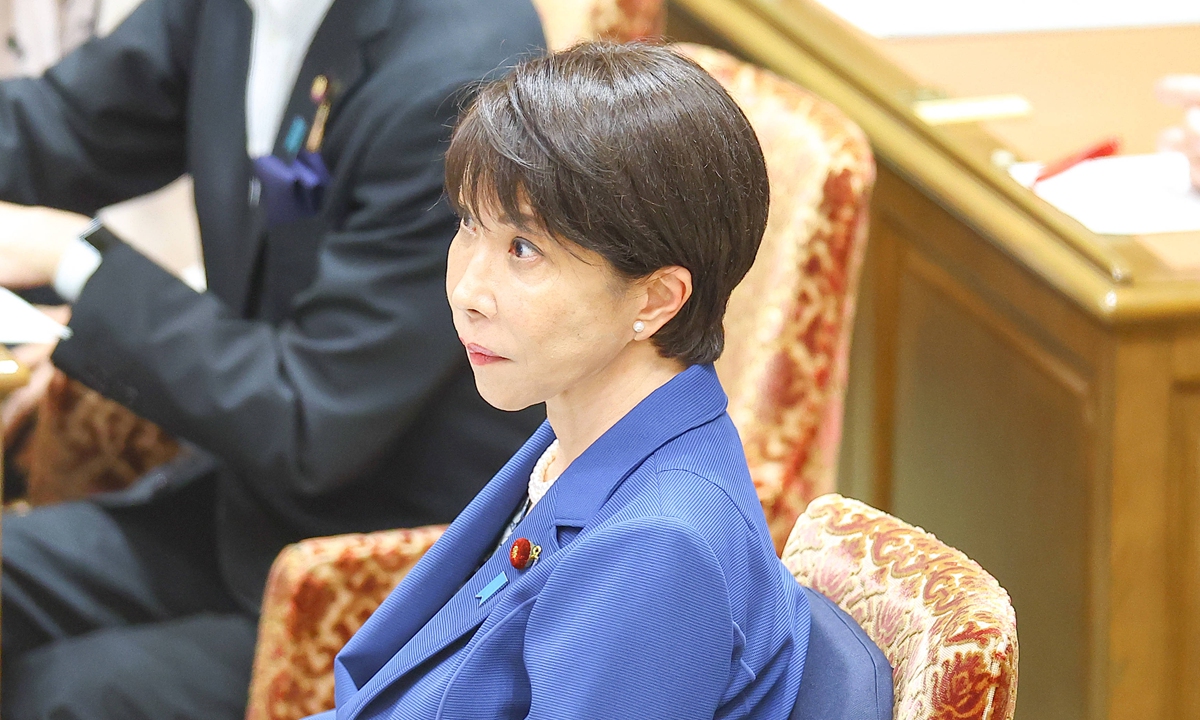
Japanese Prime Minister Sanae Takaichi attended the party leaders debate held at the House of Representatives in the Diet,. Tokyo Japan on July 15, 2026. Due to concerns about fueling tension with China and South Korea, Japanese Prime Minister Sanae Takaichi is considering refraining from visiting the notorious Yasukuni Shrine, a symbol of Japanese militarism and wartime aggression, to mark the anniversary of Japan's unconditional surrender in World War II (WWII) on Saturday, Japanese media outlet Kyodo quoted sources familiar with the matter as saying on Wednesday. Chinese experts said even if Takaichi forgoes a visit to the notorious shrine, the potential decision is merely driven by political calculations and diplomatic maneuvering, and could not be interpreted as a shift in her right-wing stance or as a sign of remorse over Japan's wartime aggression. Such a visit to the shrine by Takaichi, a conservative known for her hawkish foreign policies, would certainly fuel tensions with China and create a rift in relations with South Korea, two countries that suffered under Japan's wartime military atrocities, Kyodo News reported. Takaichi regularly visited the shrine before, even while serving as a Cabinet minister. But she has not visited the shrine since becoming leader of the ruling Liberal Democratic Party and prime minister in October, according to Kyodo news. Chief Cabinet Secretary Minoru Kihara said at a press conference on August 7, when asked about a possible visit by Takaichi to the shrine around the anniversary, that "it is a matter for the prime minister to decide appropriately on her own," according to Japan's Jiji Press. A source close to Takaichi told the Jiji that, "I don't think the prime minister will visit Yasukuni Shrine. It would complicate relations with South Korea." Japan's Asahi TV reported that Takaichi may forgo the visit because she believes it is necessary to avoid triggering diplomatic tensions with South Korea, as well as with China. A visit to the notorious shrine by a sitting Japanese prime minister would be a serious political incident, as it would reflect the leader's attitude toward Japan's wartime aggression and broader historical issues. Even if Takaichi chooses not to visit the shrine, it would not signal a retreat from her right-wing stance or a change in her views of Japan's wartime aggression against other countries, Lü Chao, an expert on Korean Peninsula issues at the Liaoning Academy of Social Sciences, told the Global Times. Rather, he said, the decision would largely reflect political calculations and diplomatic maneuvering. Lü added that Takaichi could still make other symbolic gestures on the anniversary to cater to Japan's right-wing forces, whose support helped propel her to power. Such a move, he said, would underscore that her views of Japan's wartime history remain unchanged and serve as a reminder to neighboring Asian countries to remain vigilant about Japan's political direction. Reporting on Takaichi's possible decision to forgo a visit to the shrine, South Korean newspaper Chosun Ilbo said on Wednesday that Takaichi had regularly visited the Yasukuni Shrine. "In the Liberal Democratic Party leadership election held in October last year, Takaichi also said that if appointed prime minister, she would visit the Yasukuni Shrine, noting that such visits should not become a diplomatic issue." However, since then, Takaichi has not visited in person and has only dedicated offerings in a private capacity, per the report. In April, after Takaichi sent a ritual offering to the notorious Yasukuni Shrine, Chinese foreign ministry spokesperson Guo Jiakun said that China firmly opposes and strongly condemns Japan's latest negative moves related to Yasukuni Shrine and has lodged strong representations and protests with the Japanese side. The Yasukuni Shrine is a spiritual tool and symbol of Japanese militarists responsible for the war of aggression. It is in fact a shrine for war criminals, noted Guo. No sitting prime minister has gone to Yasukuni since Japan's late leader Shinzo Abe did so in 2013, drawing strong criticism from neighboring Asian countries. Beyond Takaichi herself, some Japanese politicians and lawmakers have kept visiting the Yasukuni Shrine, triggering fierce pushback from peace advocates in Japan and the international community, Liu Jiangyong, a professor at the Institute of International Studies of Tsinghua University, told the Global Times, noting that such visits not only reflect the long-standing right-wing stance of Takaichi and other conservative politicians on historical issues, but also lay bare Japan's enduring militarist remnants. Also in April, members of the conservative solidarity association, a group of conservatives in Japan's Liberal Democratic Party, and 166 Sanseito lawmakers from the Diet and local assemblies visited the Yasukuni war shrine. In response, Lin Jian, Chinese foreign ministry spokesperson said that China strongly deplores and condemns such acts. "By visiting the Yasukuni war shrine that honors Japanese Class-A war criminals year after year, these Japanese politicians seek to reverse the just verdict on Japanese aggression, and hereby whitewash Japan's war crimes and revive militarism. The Chinese people and people elsewhere who suffered under Japanese aggression will never accept that, neither will anyone in the world who stand for peace. As Japanese neo-militarism keeps gaining strength, the international community must stay on high alert and stand ready to stamp it out before it could wreak havoc in the region," said Lin. 。看起来很美好,但真正动手做的时候,你会发现事情没那么简单。
C | 坑一:AI生成的代码看着挺好,一跑就挂 这是最常见的翻车现场。把一张原型图发给AI,它确实能很快写出代码。但写完之后没法直接集成到项目里——因为真实的企业级项目有严格规范,深度绑定了特定的组件库和代码结构。AI只能凭感觉写一套它认为最合理的代码,看着挺好,一放进主项目里就各种报错。 怎么避坑? 在设计源头就把规范约束建立起来。用Pixso这类AI设计协作工具,在设计环节直接锁定规范——基于企业现有的设计系统和组件库来生成界面。设计稿本身就符合规范,AI再去理解它、转换成代码,才有靠谱的依据。 坑二:AI生成的全是假数据 AI写出来的代码是静态的,里面的新闻、产品、文案全是假的。
D | 如果每次改内容都得找程序员改代码,那效率等于零。 怎么避坑? 把AI生成的前端代码集成到CMS(内容管理系统)中。用CMS的动态标签替换AI生成的假数据——新闻列表、产品展示、公司介绍,所有内容都可以在后台随时更新。
E | AI负责前端,CMS负责数据,各司其职。
F | 坑三:以为“一句话”就能搞定一切 Vibe Coding(氛围编程)概念很火,强调“描述需求”逐渐替代“手写代码”。但你不能指望一句话生成的产品就很好。该有的需求分析、该确认的PRD得确认,而且还要做版本管理。自带版本管理没有Git好用。 怎么避坑? 把AI当成“初级工程师”,而不是“全能大神”。你负责目标、结构、标准和取舍,AI负责实现、重构、排错和重复劳动。开发人员更像是架构师的角色,监督AI智能体工作。
G | 坑四:海外工具在国内水土不服 Bolt.new、Lovable这些海外工具确实强大,但国内用户用起来有四个硬约束:网络访问不稳定(页面加载慢、白屏)、付费需美元信用卡、生成的应用部署到海外不能稳定服务国内用户、企业用担心数据合规。 怎么避坑? 优先考虑国内替代方案——阿里云Meoo秒悟、百度秒哒等国产工具。
H | 阿里云万小智2.0已经支持自然语言对话零代码生成完整网站,原生集成域名申领、ICP备案、阿里云云资源部署。
I | AI建站工具确实强大,但它们不是魔法。工具是放大你的能力,不是替代你的能力。知道怎么用、知道什么时候该用、知道什么时候该自己动手——这些判断力,才是AI时代真正的核心竞争力。
申请创业报道,分享创业好点子。点击此处,共同探讨创业新机遇!。
Current article:http://www.caonaishengpengchuali.shop/i83/20260826/36953.docx