
料理仙姬
제주항공 9월 말부터 부산~구이린 노선에 주 4회 신규 취항_我的网站

A |
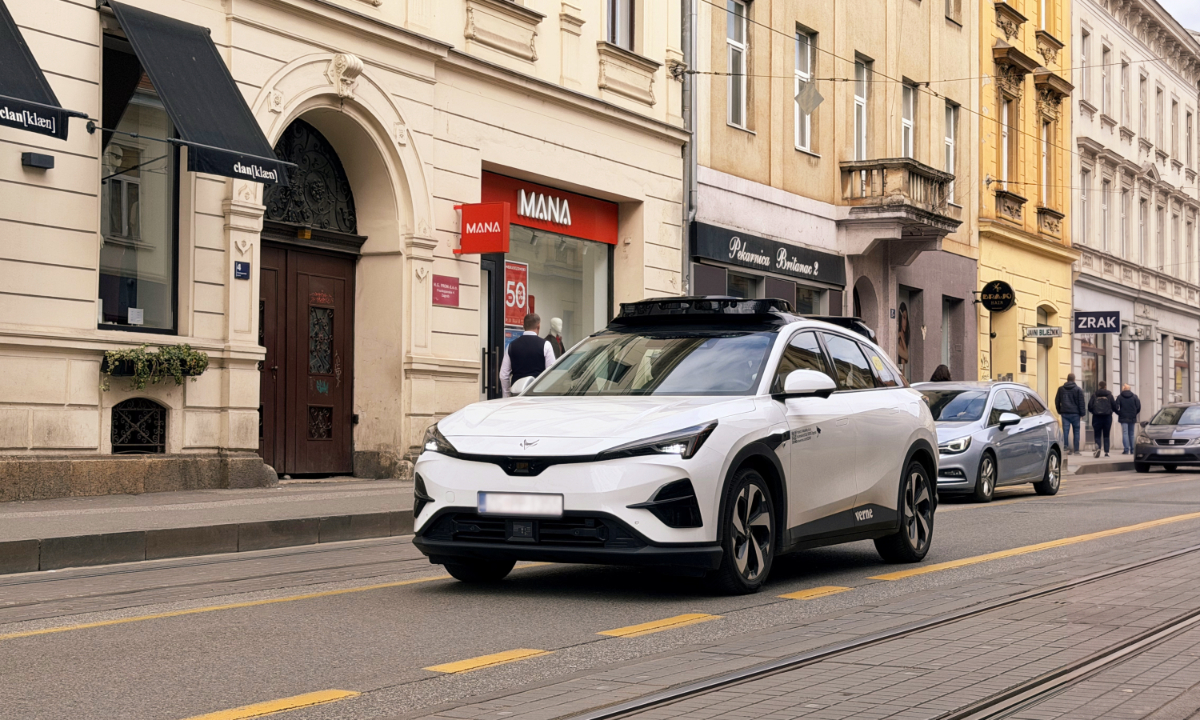
Chinese autonomous-driving company Pony.ai said on Monday that its cumulative autonomous-driving distance worldwide has surpassed 100 million kilometers, marking the latest milestone as China's driverless sector moves from technology validation toward mass production and scaled commercial deployment.
The milestone comes as L4 autonomous driving gains commercial traction across passenger transport and logistics in China, while Chinese companies are accelerating overseas deployment through partnerships with local operators in markets including Europe and Southeast Asia.
Industry experts said that the significance goes beyond rising distance. As commercialization gathers pace, the next phase of competition will increasingly hinge on whether autonomous-driving technology can be deployed at scale, brought down to commercially viable costs and replicated across different transport scenarios and markets.
At a recent media briefing, Pony.ai said that its fourth-generation L4 autonomous electric heavy-duty truck had entered mass production, with commercial operations expected to begin in the coming months. The company plans to deploy 500 to 1,000 trucks over the next two to three years across long-haul freight, bulk cargo transport and port logistics.
A notable part of that transition is the sharp decline in costs. Autonomous-driving hardware costs for Pony.ai's fourth-generation heavy truck are about 70 percent lower than for the previous generation, according to the company.
Similar cost reductions are also emerging in robotaxis. Pony.ai said on its official blog that the bill-of-materials cost of the autonomous-driving kit for its seventh-generation robotaxi has fallen 70 percent from the previous generation, helping the company achieve unit-economics breakeven in Guangzhou and Shenzhen, South China's Guangdong Province.
China's autonomous-driving sector is moving from technology validation to large-scale commercial deployment, underpinned by the rapid accumulation of real-world driving data, Pan Helin, a member of the Expert Committee for the Ministry of Industry and Information Technology, told the Global Times on Monday.
"Continuous road testing allows L4 systems to better adapt to local traffic conditions, laying the groundwork for wider commercial use," Pan said.
China has opened multiple cities to autonomous-driving applications, with commercialization gathering pace. As deployment expands and marginal technology costs fall, autonomous driving is expected to unlock significant commercial value and emerge as a new form of mobility, veteran industry analyst Liu Dingding told the Global Times.
Pony.ai aims to expand its robotaxi fleet to more than 3,000 vehicles by the end of 2026 and operate in 20 cities worldwide, with nearly half of those cities overseas. It also plans to develop an international version of its seventh-generation robotaxi tailored to different regulatory requirements and infrastructure, supporting the deployment of more than 1,000 vehicles in overseas markets.
Pony.ai's ambition also reflects a broader push by Chinese autonomous-driving companies to expand overseas.
On August 3, WeRide announced a partnership with Danish shared-mobility platform GreenMobility to deploy autonomous ride-hailing services in Denmark, marking its first entry into the Nordic region and sixth European market. Subject to regulatory approval, the service is expected to open to the public in the first half of 2027 using WeRide's latest GXR L4 robotaxi.
WeRide said on its website that its autonomous-driving products are now deployed in more than 40 cities across 12 countries. The company holds autonomous-driving permits in eight markets and operates a global L4 fleet of more than 3,000 vehicles.
A similar expansion is taking place in public transport. On July 17, Chinese autonomous-driving company MOGOX announced a strategic partnership with Singapore-based ComfortDelGro Bus. The two companies will cooperate on autonomous-vehicle deployment and operations, commercial expansion and coordination with regulators.
Pan said that China's autonomous-driving sector has two key advantages: a broad supplier base for major components and a large domestic market that allows companies to deploy services widely and accumulate real-world data. Advances in simulation and synthetic-data technologies have further strengthened the sector's ability to train and refine autonomous-driving systems.
Liu pointed to the cost benefits of scale. As deployment expands, the cost of key automotive-grade components such as lidar and chips continues to fall, improving the economics of commercial operations and creating more room for technological iteration, he said.
。 제주항공 제공제주항공이 지난 4월 국토교통부로부터 배분받은 중국 노선 운수권을 활용해 오는 9월 23일부터 부산~구이린 노선에 주 4회(수·목·토·일요일) 일정으로 신규 취항한다고 26일 밝혔다.제주항공의 부산~구이린 정기 노선은 김해국제공항에서 밤 9시45분(이하 현지시각)에 출발해 다음날 0시35분 구이린량장국제공항에 도착하고, 구이린공항에서 새벽 1시35분에 출발해 같은 날 아침 6시5분 김해공항에 도착하는 일정이다.동계스케줄이 시작되는 10월 25일부터는 일정이 일부 조정돼 김해공항에서 밤 9시40분에 출발해 구이린공항에 다음날 0시45분에 도착하고, 구이린공항에서 새벽 1시45분에 출발해 김해공항에 6시5분 도착하게 된다.제주항공은 현재 운항 중인 인천~칭다오/웨이하이/옌지/하얼빈/자무스/스자좡, 부산~상하이(푸동)/스자좡/장자제, 제주~베이징(서우두)/베이징(다싱) 등 11개 중국 노선에 이번에 신규 취항하는 부산~구이린 노선을 더해 총 12개의 중국 노선을 운항하게 됐다.※CBS노컷뉴스는 여러분의 제보로 함께 세상을 바꿉니다. 각종 비리와 부당대우, 사건사고와 미담 등 모든 얘깃거리를 알려주세요.이메일 : [email protected]카카오톡 : @노컷뉴스사이트 : https://url.kr/b71afn。
Current article:http://www.caonaishengpengchuali.shop/fb5/zoy.doc
Published on:20:52:05
栏目相关
- 原创 安海瑟薇获颁迪士尼传奇人物 这一生最爱就是演戏
- 国内商品期市夜盘收盘多数下跌,能源品跌幅居前
- 开展农村人居环境整治观摩拉练活动
- 全红婵跳板首秀夺冠,跳水梦之队世锦赛百金达成!
- 中国财政部:将及时谋划出台务实管用的增量政策,中国财政部:将及时谋划出台务实管用的增量政策
- 国家防总、应急管理部针对浙闽防汛防台风应急响应升至三级
- 资金层面出现三个降温信号
- 국도 42호선 원주 문막~흥업 도로건설 사업 '청신호'
- 机器人100米预赛小组垫底,宇树科技回应:精力主要在量产产品上,没能顾全赛事准备
- 交易截止日换来约基奇!湖媒晒3换2设想无首轮:里夫斯+凯斯勒成筹码
- 人民锐评:“假余华”泛滥,谁来管?
- Delhi Excise Policy: CBI arrests Abhishek Boinpally