
忏悔录
'JCB Prize for Literature' announces its most diverse shortlist in its 5th year_我的网站

A | Kolkata, Oct 22 (UNI) In its 5th year, the JCB Prize for Literature Saturday announced its 2022 Shortlist at the Glenburn Penthouse, Kolkata in an intimate gathering of authors, translators and the literary community of the city.
The JCB Prize for Literature is presented each year to a distinguished work of fiction by an Indian author, as selected by the jury.
The Jury Chair, AS Panneerselvan, unveiled the Shortlist at the Kolkata event. The shortlisted novels are translations from five different languages including Urdu, Hindi, Bangla, Malayalam and Nepali, with 2 debut novelists on the list. Following the unveiling, Jayant Kriplani, Paramita Saha and Sandip Roy read passages from the shortlisted titles.
The shortlisted novels are:
1. Imaan by Manoranjan Byapari, translated from the Bengali by Arunava Sinha (Eka)
2. The Paradise of Food by Khalid Jawed, translated from the Urdu by Baran Farooqi (Juggernaut)
3. Valli by Sheela Tomy, translated from the Malayalam by Jayasree Kalathil (Harper Perennial)
4. Tomb of Sand by Geetanjali Shree, translated from the Hindi by Daisy Rockwell (Penguin Random House India)
5. Song of the Soil by Chuden Kabimo, translated from the Nepali by Ajit Baral (Rachna Books)
Commenting on the shortlist, the chair of jury 2022, AS Panneerselvan said “Judging literature is a challenge. From exploring new content and deploying various literary devices, authors constantly try to push the boundary. Every step is crucial and every innovation is precious. However, when the final evaluation happened, these wonders of the mind gave space to the power of the heart, where empathy became the criteria for creating the shortlist. All the novels in the shortlist exemplify the idea of empathy, concern for fellow humans, and in a sense a worldview in which the head does not subsume the heart.”
The JCB Prize titles are present across bookstores in the country and is also available in an online store on Amazon. Pragya Sharma, Director, Media Business, Amazon India said, “We at Amazon are delighted to be associated with the JCB Prize for Literature since its inception. Together, we are committed to nurturing the passion for reading in the country. India is home to many different languages and diverse cultures that produce a plethora of high-quality literature. The JCB Prize has consistently, over the last 5 years, been a trustworthy & prestigious source for recognizing these distinguished works of fiction by Indian writers and Amazon India is excited to bring these gems to readers across the country and beyond.”
With the winner to be decided next month, Mita Kapur, Literary Director, said, "The fact that in the 5th year of the JCB Prize for Literature we have the most diverse shortlist yet, fills us with hope. This is a list that brings forth the many Indians across time and geography. This is truly representative of the spectrum of languages, authors and publishers that make up our industry, but most of all it represents the quality of excellent writing that India has to offer."
Talking about the prize, each of the five shortlisted authors will receive Rs 1 lakh; and if a shortlisted work is a translation, the translator will receive an additional Rs 50,000. The winner of the Rs 25 lakh JCB Prize for Literature will be announced on November 19, 2022. If the winning work is a translation, the translator will receive an additional Rs 10 lakh.
Shortlisted books: Jury comments, Synopses and Author Biographies:
Imaan: Manoranjan Byapari, translated by Arunava Sinha (Eka)
The Jury says: Imaan is a completely novel iteration of the humanist tradition of Bengali literature. It presents a vivid portrait of people from the periphery but is neither voyeuristic nor patronising. Each character has agency no matter how circumscribed their life may be. A raw, deeply authentic and honest story which is also well-paced, poignant and eloquent.
Synopsis: Imaan entered Central Jail as an infant—in the arms of Zahura Bibi, his mother, who was charged with the murder of his father and who died when he was six. He left twenty years later, having spent his time thus far shuttling between a juvenile home and prison. With no home to return to, Imaan ends up at the Jadavpur railway station, becoming a ragpicker on the advice of a consummate pickpocket. The folk of the railside—rickshaw-pullers, scrap dealers, tea-stall owners, those who sell corpses for a little bit of money—welcome him into their fold, but the world of the free still baffles him. Life on the platform is disillusioning and far more frightening than the jail he knew so well. This free world too is a prison, like the one he came from, only disconcertingly large. But no one went hungry in jail. And everyone had a roof over their heads. Unable to cope in this odd world, Imaan wishes to return to the security of a prison cell. He is told that, while there is only one door out of prison, there are a thousand through which to return. Imaan—whose name means honesty, conscience—is he up to the task? Written in Manoranjan Byapari’s inimitable style, where irony and wry humour are never too far from bitter truths, this new novel is a searing exploration of the lives of the faceless millions who get by in our towns and cities, making it through one day at a time.
Author: Manoranjan Byapari was born in the mid-fifties in Barishal. After he migrated to West Bengal at the age of three, he lived in two refugee camps before he moved away at the age of fourteen to work. At twenty-four, he became politically active with the Naxals after meeting famous labour activist Shankar Guha Niyogi. It was in prison that Byapari taught himself to read and write. Later, when he was working as a rickshaw puller, he had a chance encounter with Mahasweta Devi who asked him to contribute to her journal Bartika. He has since then published eight novels, four volumes of memoirs and over fifty short stories. His essay Is there Dalit writing in Bangla which was translated into English by Meenakshi Mukerjee for Economic and Political Weekly launched him into mainstream prominence. He worked until recently as a cook with the Helen Keller Institute for the Deaf and Blind in West Bengal.
He won the 2019 Hindu Prize For Non-Fiction for his biography Itibritte Chandal Jiban translated into English as Interrogating My Chandal Life: An Autobiography of a Dalit.
Translator: Arunava Sinha translates Bengali fiction and nonfiction into English. Fifty-one of his translations have been published so far. Twice the winner of the Crossword translation award for Sankar’s Chowringhee (2007) and Anita Agnihotri’s Seventeen (2011), respectively, he has also won the Muse India translation award (2013) for Buddhadeva Bose’s When The Time Is Right. He has been nominated for the Independent Foreign Fiction prize and the Best Translated Book award in the US. He is a recipient of an English PEN translation grant for Sangeeta Bandyopadhyay's The Yogini. Besides India, his translations have been published in the UK, the US, and in several European and Asian countries. He has conducted workshops at the British Centre for Literary Translation, UEA; University of Chicago; Dhaka Translation Centre; and Jadavpur University. He is an associate professor of practice in the Creative Writing department at Ashoka University.
UNI SY。

B |
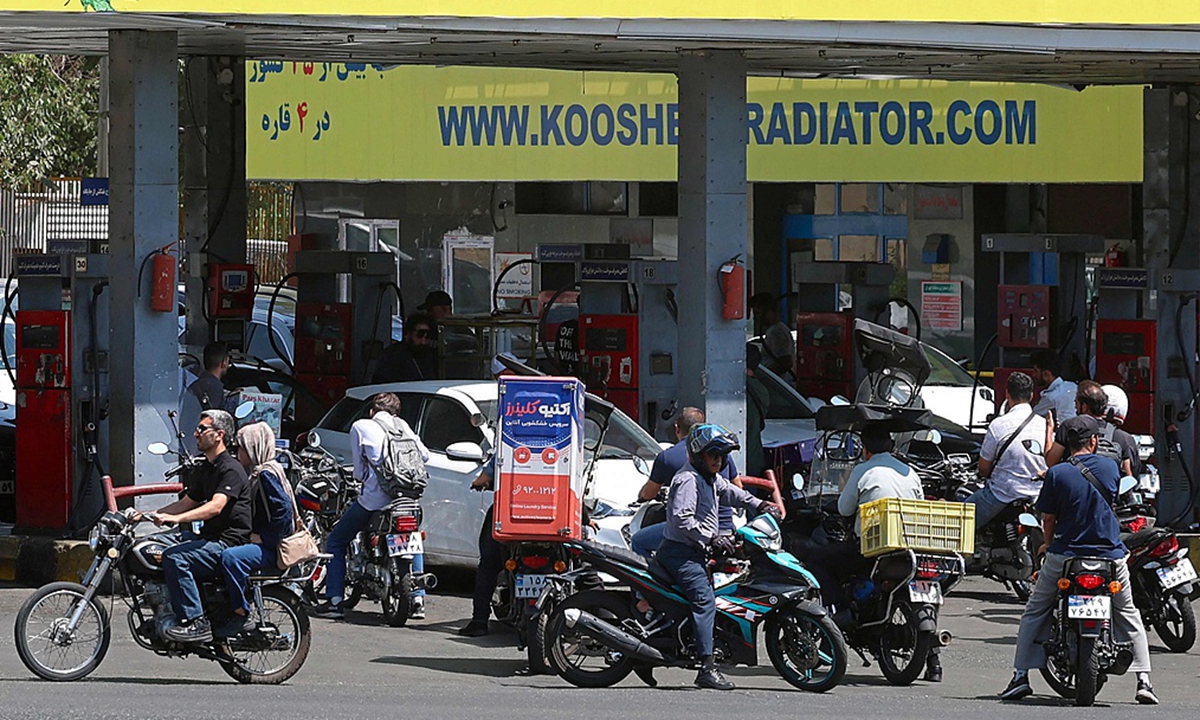
As military strikes and diplomatic negotiations have both failed to bring an early end to the roughly six‑month‑old US-Iran conflict, Washington rolled out new sanctions against Tehran on Monday local time intended to further strangle its economy. Iran, for its part, has vowed a tougher pushback.
In a news conference on Monday, Treasury Secretary Scott Bessent threatened new sanctions on countries refusing to cut economic ties with Iran, following recent rhetoric from Washington threatening an "economic D-Day" for Iran.
Meanwhile, the Office of Foreign Assets Control (OFAC) under the US Treasury announced secondary sanctions on nearly 60 entities, individuals, and vessels in multiple jurisdictions which, according to the US' claims, enable Iran's activities, including so-called nuclear and missile technology procurement, cyber operations, and oil-revenue generation networks.
According to Reuters, those sanctions targeted businesses in China, the UAE, Singapore and several other countries, including a cooking-oil refinery in France, but did not include any of the Chinese financial institutions suspected of facilitating Iran's oil trade.
In response to US Treasury Secretary Scott Bessent laying out plans for economic asphyxiation of Iran, expanding Washington's secondary sanction threats and warning of dire consequences for countries that do not join the campaign, Chinese Foreign Ministry spokesperson Lin Jian said at a press briefing on Tuesday that China has made clear on many occasions its firm opposition to illicit unilateral sanctions that have no basis in international law or the authorization of the UN Security Council.
"Economic warfare and maximum pressure provide no solution. On the contrary, they only serve to fuel tensions and lead to risk spillover, which will disrupt the global economic and financial order, and harm the legitimate rights and interests of other countries," the spokesperson said.
The pressing task is to facilitate the deescalation of the situation and return to dialogue and negotiation as soon as possible, Lin said, adding that China will do everything necessary to firmly safeguard its rights and interests, Lin added. Lin also said China's cooperation with Iran is conducted within the framework of international law, thus should not be disrupted.
When asked whether China has received any such timeline, as the US stated it would give countries a timeline on when to shut down the actions that it has identified, and how China intends to respond to the relevant announcements by the US Treasury involving China-based entities and individuals, Chinese Foreign Ministry spokesperson Lin Jian stated on Tuesday that China is closely following the developments, and will do everything necessary to firmly safeguard our rights and interests.
In May this year, China's Ministry of Commerce issued a blocking ban prohibiting any recognition, enforcement or compliance with US sanctions imposed on five Chinese companies on the grounds of their alleged involvement in Iranian petroleum transactions.
Relying on its financial hegemony and long‑arm jurisdiction, the US enforces unilateral sanctions with no basis in international law. Such measures severely undermine fundamental consensus for international trade and erode the existing international order, Zhou Mi, senior research fellow at the Chinese Academy of International Trade and Economic Cooperation, told the Global Times on Tuesday.
In essence, Washington is imposing its Iran‑focused policies to enterprises across the globe, compelling third‑party actors to fall in line with its diplomatic objectives, Zhou noted.
The latest sanctions would affect a broader range of countries, industries and firms. They will not only draw wider opposition from the international community, but also boomerang on the interests of US‑owned enterprises, he added.
Fewer levers left
"We are launching an economic onslaught against Iran's financial connections around the globe," Bessent claimed at a press conference. "Our objective is to sever every economic lifeline" that sustains the country, he said, according to a Treasury release.
The US Treasury Department said in a release that the new sectoral sanctions determinations target five critical sectors - digital assets, technology, gold, aviation and shipping - that the US claimed Iran has relied on to support its economy.
US Treasury claimed that "any entity that facilitates money laundering or sanctions evasion on behalf of Iran risks being cut off from the US financial system."
OFAC also suspended several general licenses that previously authorized certain remittance payments to Iran and Iranian access to the US cultural and academic system. The office also issued additional guidance on the so-called sanctions risks of bowing to Iranian demands related to shipping in the Strait of Hormuz.
Mohammad Mokhber, an aide to Supreme Leader Mojtaba Khamenei, said in an X post on Monday that Iran's response to US sanctions and pressure will be "more decisive than before."
Iranian Economy Minister Ali Madanizadeh said that Tehran "is and was ready," with a two-year plan to counter Washington's new sanctions. He told state television that "it seems they wished to suffer yet another defeat," per an AFP report.
Iranian Parliament Speaker Mohammad Bagher Ghalibaf responded in an X post that "the Americans know no one will believe their nonsense," noting that the US is not in a position economically to restrict its relations with other countries.
Alan Eyre, a distinguished diplomatic fellow at the Middle East Institute, told NBC News that after six months of combat, the US government "has few remaining levers it can use to convince Iran's major trading partners to materially reduce their economic ties."
While Washington's maximum‑pressure campaign may deliver short‑term shocks to Iran's economy, it can hardly "strangle" the country completely, said Liu Zhongmin, a professor at the Middle East Studies Institute of Shanghai International Studies University.
He added that Iran's economic resilience cannot be underestimated. Having borne decades of crippling sanctions from the US and Western nations, Tehran has built substantial experience in sanction‑busting and developed coping mechanisms ranging from basic‑industry self‑reliance and regional trade networks to oil‑for‑goods swaps and non‑US dollar‑denominated trade. Furthermore, the Strait of Hormuz remains a source of strategic leverage for Iran to push back against US pressure.
The expert said that Tehran and Washington are encountering "a battle of wills," and Iran believes the economic costs the US would suffer from a Hormuz blockade would outweigh the damage inflicted on Iran by sanctions.
Washington's "economic strangulation" policy risks ending in failure unless it yields short‑term outcomes, particularly securing the opening of the Strait of Hormuz, Liu added.
Self-created dilemma
As the US ramps up pressure on Iran, Americans are growing averse to a protracted war.
According to a Reuters/Ipsos poll that closed on Monday, US public approval of the war with Iran fell to its lowest level since the conflict's early days, with just 31 percent of Americans supporting US military action.
On June 18, the US and Iran signed an MoU, under which the two were scheduled to hold negotiations within a period of 60 days, which ended on August 17, to reach a final agreement. However, the talks' fate remains unclear following renewed escalation between the two countries.
Iranian political analyst Mostafa Khoshcheschm told Al Jazeera that the new US sanctions intended to create an "economic onslaught" were a "political show" of intimidation.
Liu said that by resorting to an "economic strangulation" tactic after miring itself in a fruitless military quagmire over Iran, the US has laid bare its practical predicament and strategic dilemma, and seemingly running out of cards.
Citing sources, CNN reported earlier this month that the US military has exhausted nearly 80 percent of its interceptors for a key missile defense system as senior US military commanders are warning that the Pentagon's munitions stockpile is "dangerously low."
Faced with depleted ammunition stockpiles and insufficient military‑industrial capacity, and amid growing domestic criticism of its Middle East policy, the White House has opted for tough economic measures against Iran, Liu said. "Less costly than military coercion, such moves help Washington strike a tough posture before voters and shun political risks from further military escalation," said the expert.
There is, however, an increasingly obvious paradox in Washington's economic warfare against Iran: the tighter the sanctions, the tighter global energy supplies become, and the higher costs borne by American consumers and businesses, the expert added.
。

C |
Current article:http://www.caonaishengpengchuali.shop/exol/20260826/7552.xls
Published on:12:25:53
我的网站最近更新
- 南财基金通·股票型基金收益排行榜(9月13日)_证券投资_包括
- Maui releases 911 calls from deadly wildfire in response to public record request
- 福彩销售网点变身暖心救助驿站,织密基层社会救助便民网络
- 琼海市疫情应急价格监测日报(2022年9月14日)_海南_防控
- 2026intertextile秋冬家纺展在上海开幕
- 美国山火再升级,损失超上万亿!特朗普儿子曝光内幕,果然不简单
- 국회 정무위, ‘홈플러스 상생협력 촉구 결의안’ 채택
- 别样小寒 乐暖冬日—华新幼教集团开展小寒节气活动纪实
- Box Office Report: Tere Ishk Mein Races Toward The 100 Crore Mark in Just Five Days
- “保”驾护航,“救”在身边——保育员急救技能评比
- 定位增程SUV/综合续航超1000km+!大众ID.ERA将于明年4月份量产
- 凌晨利好突袭!霍尔木兹海峡大消息!特朗普释放重磅信号
- 出版传媒:上半年净利润3220.41万元,同比下降25.83%
- 最能让你放松的运动,为什么是瑜伽?
- AI建站避坑指南,别被“一句话生成”忽悠了
- 移动云(西部)Token中心正式发布
- 跨越两千公里的“零碳加油”:8000吨绿色甲醇背后的“中国方案”,跨越两千公里的“零碳加油”:8000吨绿色甲醇背后的“中国方案”
- 连日来持续降雨 厦门“菜篮子” 量足价稳
- 日産は崖っぷちでもまだ戦える!? 商品力一本勝負の再建フェーズへ
- 进一步满足人民群众多元安居需求
- 特朗普再称:霍尔木兹海峡是美国的领土!他还称伊朗非常渴望达成协议
- 报告:三星2018年营收连续17年位居韩国科技公司第一。
- 韩国银行在华遭诈损失近4亿人民币,内控松懈引争议
- 8月份CPI公布,13省CPI同比涨幅高于全国
我的网站热门资讯
- 河北五超·微视频|40秒带你感受武乡风骨 沧州武术燃动五超赛场
- 小米混合3手机终于来到欧洲:不便宜
- 英伟达确定在Rubin中使用M9材料,A股谁能受益?| 1022 张博划重点
- Will Smith and Jada Pinkett Smith have been separated since 2016, she says
- 法国声称,太平洋地区的叛乱已经被成功镇压!
- 新机:华为10000mAh电池新机曝光;荣耀影像技术发布会官宣;三星Galaxy Z Fold8卖 1.29万元;HMD复刻Windows Phone磁贴UI
- “大义灭亲” :银川10岁男孩被父亲批评后打110举报父亲“藏罂粟壳”!民警上门搜出8个
- 《牛来》持续突破!票房已达5000万 豆瓣6.0及格神作
- 【期股联动】甲醇主力盘中暴跌超5%!伊朗制裁升级叠加装置检修,化工板块风云突变
- AI opens new creative doors, raises new concerns across China’s screen industry
- CBA首组半决赛对阵:北京VS山西 本季常规赛北京0-2遭横扫
- Trump Tariff Live: भारत पर आज से 50% अमेरिकी टैरिफ लागू, नोटिफिकेशन जारी; PM मोदी ने दिया आत्मनिर्भरता पर जोर
- 泉州获批国家级技术与创新支持中心正式运行
- 奥克兰免费怀唐伊音乐会火热开启 交通严重拥堵
- 三星发布新一代折叠屏智能手机,消费电子创新周期再度开启
- 中国男篮vs新西兰男篮大名单:胡金秋胡明轩回归 杨瀚森归队今晚不打
- 经过基因改造的浮萍可能是一种更可持续的生物燃料来源
- “上合时间”即将开启!这些知识点你应该掌握
- WAIC2026探展|中兴通讯在WAIC放大招:OEX架构如何让国产芯片“组团”打败“单挑”?
- 【现货】8月26日各地区纯碱现货价格汇总
- 去哪儿网虚假宣传“鲁雁经济舱”,实际出票普通经济舱Y/T,客服多次拖延
- 瞄准问题“破壁垒” 聚焦需求“强服务”
- 全国少数民族文艺会演剧目山东梆子现代戏《孔繁森》在北京成功展演
- 直升机向广西被淹村子空投物资